ChatGPT Ad Specs: Character Limits, Image Sizes, and What OpenAI Actually Documents
By Ansh Khandelwal 10 min read



In brief
Five sources publish five different character limits. OpenAI documents image rules precisely and publishes no character limits at all — compared side by side.
Last verified 13 September 2026. Version 1.1. Next scheduled review 13 October 2026.
Look up the ChatGPT ads character limits and you will get a number. Look it up on a second site and you will get a different number. We checked five and got five answers, spanning 16 to 50 characters for the title and 32 to 150 for the description. OpenAI still publishes no text limit that resolves the conflict.
OpenAI publishes none of them.
That is the finding, and it is worth more than a spec sheet would be. The image rules are documented to the pixel: PNG or JPG, square, from 256 by 256 to 1200 by 1200, publicly accessible, opening directly to the image. The text limits are not documented anywhere. That asymmetry leaves the format room to change across surfaces.
So this page does not pick a number. It shows you every published claim, who made it, and what OpenAI has and has not said, and then tells you what to do while it stays unresolved.
What are the ChatGPT ads character limits?
OpenAI does not publish them. Its advertiser documentation lists the fields in the ad unit and states no character limits for any of them.
Five third-party sources publish limits anyway, and they do not agree with each other.
| Source | Title limit | Description limit | Basis given |
|---|---|---|---|
| OpenAI Help Center | Not published | Not published | Lists the fields, states no limits |
| Index Lab | 24 characters | 48 characters | None stated |
| Digital Results | 16 to 24 characters | 32 to 48 characters | None stated |
| A widely circulated video tutorial | 16 characters | 32 characters | Screen recording of the builder |
| DashTwo | 50 characters | 100 characters | Screenshot of the creative builder, captioned as enforced by the fields |
| Simplified | 40 characters | 150 characters | None stated. Also states the format is text only |
The title claims range from 16 to 50. The descriptions range from 32 to 150. That is not a rounding disagreement between practitioners. Somebody is looking at a different product, or several people are repeating each other's guesses.
Two of these deserve separate treatment.
DashTwo is the only source claiming to show the builder. Its page carries a screenshot of the ad creative builder captioned as enforcing 50-character headlines and 100-character descriptions. If that screenshot is current and unedited, it is the strongest evidence in the category and everyone else is wrong. We cannot verify it, because verifying it requires an advertiser account and we do not have one. We are flagging it as the claim most likely to be right rather than quietly leaving it in a table.
Simplified is wrong about something checkable. It states that ChatGPT ads are text only with no image or video. OpenAI's own documentation lists an image asset as part of the ad unit and publishes detailed image requirements, and the troubleshooting guide has an entire section on why images fail to upload. Whatever its character limits are based on, it is not the current format. Treat the rest of that page accordingly.
The pattern underneath the table is worth naming. Index Lab publishes 24 and 48 as hard limits with a recommended range of 16 to 24 and 32 to 48. Digital Results publishes 16 to 24 and 32 to 48 as the specs themselves. One of those reads like the other one's advice column reprinted as a rule.
What image size do ChatGPT ads use?
This part is documented, and it is not in dispute.
Current Ads Manager documentation gives a 256 by 256 pixel minimum, while OpenAI's troubleshooting guidance gives a 1200 by 1200 maximum. Combined, the documented working range is 256 to 1200 pixels square, in PNG or JPG. The image must be publicly accessible and its URL must open directly to the file rather than to a page containing it. Accepted hosting is a public Google Drive link, an AWS-hosted link such as S3 or CloudFront, or self-hosted on the advertiser's own domain or CDN.
One correction. Index Lab publishes the image range as 640 to 1200 pixels. The current documented minimum is 256, not 640. A 640-pixel working minimum may still be sensible production advice, but it is not the platform requirement.
What does a ChatGPT ad actually contain?
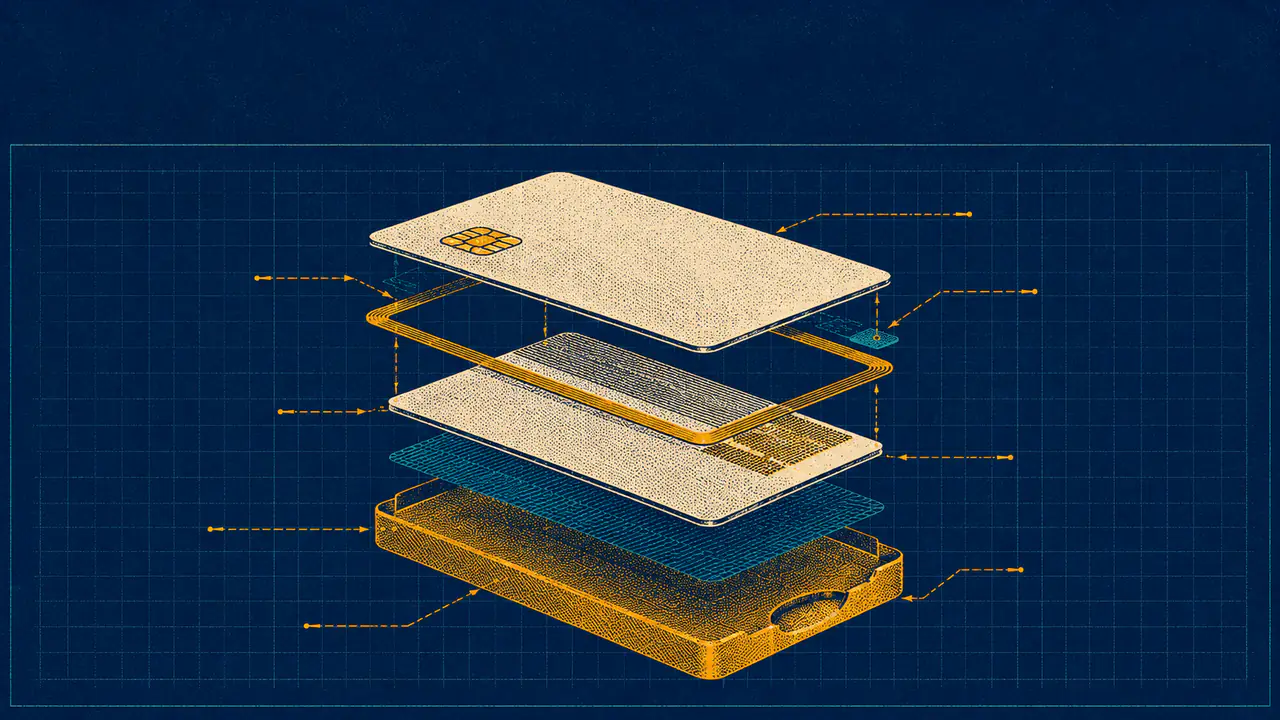
Six elements, per OpenAI's advertiser documentation: advertiser name, favicon or advertiser logo, title, copy, landing page and image asset.
The ad renders below the ChatGPT response in a labelled block and does not alter the answer above it. There is one format. No carousels, no video, no expandable units, no text-only variant.
Two of those six are set at the account level rather than per ad. The account name and logo come from Settings, under Account info, and OpenAI states that ads will not serve until that step is complete. People miss this and then debug the campaign.
Why the image rules are documented and the text rules are not
We do not know, and neither does anyone publishing a number. What follows is inference and we are labelling it as inference.
Image specifications are an ingestion constraint. A file either meets them or the upload fails, so the rules have to be published or every advertiser files a support ticket. Character limits are a rendering decision, and rendering decisions change. The ad card has to fit inside a response on a phone, a desktop browser and whatever surface comes next, and OpenAI has said plainly that it will keep changing ad formats through the beta.
Publishing a hard character limit would commit them to it. Not publishing one lets the field truncate at whatever length the layout needs this month.
If that reading is right, then every source in the table above is publishing a snapshot of a UI constraint as though it were a specification, and the ones that agree with each other may simply have been screenshotted in the same week.
What to do while this is unresolved
Write to the shortest credible claim, which is 16 characters for the title and 32 for the description. Copy that fits 16 characters will render inside a 50-character field. Copy written for 50 will be truncated by a 16-character field, and you will not necessarily be told.
Front-load the specific word. If truncation happens it takes the end of the string, so the brand or the offer belongs at the start rather than after a qualifier.
Confirm inside your own account before a launch. The builder enforces whatever the real limit is, and that number beats every article on this subject including this one.
Then check what actually rendered. Reporting lags delivery by up to seven hours, so an ad that looks fine in the builder and reads wrong in the wild takes most of a day to discover.
What we cannot tell you
Whether any of the five published limits is correct. We do not have an advertiser account, and writing a spec sheet from other people's spec sheets is how this mess started.
Whether the limits differ by surface. Nothing in OpenAI's documentation addresses whether a card in the mobile app truncates at the same point as one in a desktop browser, and none of the third-party sources raise the question.
Whether they are stable. OpenAI states it will continue changing ad formats during the beta, so a limit confirmed today carries a shelf life nobody has quantified.
If you have a live account and can settle any of this, tell us and we will publish the correction with your name on it and the date it was verified. That is a better outcome for this page than being right by luck.
Quick answers
What are the ChatGPT ads character limits? OpenAI does not publish them. Third-party sources claim between 16 and 50 characters for the title and between 32 and 150 for the description, and they cite no primary source. The only claim backed by a screenshot of the builder is 50 and 100.
What image size do ChatGPT ads use? Square, PNG or JPG, from 256 by 256 to 1200 by 1200 pixels. The image must be publicly accessible and the URL must open directly to the image file. The 640-pixel floor circulating on some sites is advice, not the documented minimum.
Are ChatGPT ads text only? No. The ad unit includes a required image asset alongside the advertiser name, favicon, title, copy and landing page. Sources describing the format as text only are describing something other than the current product.
What does a ChatGPT ad look like? One labelled card below the response, containing advertiser name, favicon, title, copy, image and a landing page link. There is a single format. No video, no carousel, no expandable unit.
Where do the account name and logo in my ad come from? Settings, then Account info, in Ads Manager. They are account-level rather than per-ad, and OpenAI states ads will not serve until that step is complete.
How long should a ChatGPT ad headline be? Until the limit is documented, write to 16 characters and front-load the brand or the offer. Short copy renders inside a long field. Long copy gets truncated by a short one, and the truncation takes the end of the line.
Why do different sites give different ChatGPT ad character limits? Because OpenAI publishes none, so every published number is either a reading of the builder UI at a particular moment or a repetition of somebody else's reading. The format is still changing during the beta.
What image hosting does OpenAI accept for ads? Public Google Drive links, AWS-hosted links such as S3 or CloudFront, and self-hosted images on the advertiser's own domain or CDN. The URL has to open directly to the image rather than to a page displaying it.
Sources
| Source | Tier | Used for |
|---|---|---|
| OpenAI Help Center, Ads in ChatGPT: The Basics (article 20001207), retrieved 8 August 2026 | Confirmed, primary | The six ad unit elements, and the absence of any published character limits |
| OpenAI Ads Manager documentation, retrieved 13 September 2026 | Confirmed, primary | Image format, square requirement and 256 by 256 minimum |
| OpenAI Help Center, Troubleshooting Common Issues (article 20001217), retrieved 13 September 2026 | Confirmed, primary | 1200 by 1200 maximum, public accessibility, direct-open URL, accepted hosting, seven-hour reporting lag |
| OpenAI Help Center, Ads Manager Beta Account Setup (article 20001213), retrieved 8 August 2026 | Confirmed, primary | Account name and logo set in Settings, and ads not serving until complete |
| OpenAI Help Center, Frequently Asked Questions (article 20001220), retrieved 8 August 2026 | Confirmed, primary | OpenAI's statement that ad formats will continue to change during the beta |
| Index Lab, ChatGPT ads creative specs | Reported, practitioner | The 24 and 48 character claim, and the 640 pixel image floor |
| Digital Results, ChatGPT Ads Specs | Reported, practitioner | The 16 to 24 and 32 to 48 character claim |
| DashTwo, ChatGPT Advertising in 2026 | Reported, practitioner | The 50 and 100 character claim, and the builder screenshot it rests on |
| Simplified, ChatGPT Ad Creative | Reported, practitioner | The 40 and 150 character claim, and the text-only description we correct |
| A widely circulated ChatGPT ads video tutorial | Reported, practitioner | The 16 and 32 character claim |
Every third-party figure above is labelled as reported and remains so until a primary source or a verifiable account screenshot resolves it.
Related reading
- What Has to Be True Before You Can Run a ChatGPT Ad The eleven conditions, including the account settings step that stops ads serving.
- ChatGPT Ads Troubleshooting: Every Documented Failure Mode Including why images fail to upload.
- Blocking AI Crawlers Can Get Your ChatGPT Ads Rejected The landing page half of creative approval.
- What Are ChatGPT Ads? The format, the four gates, and what the platform will not tell you.
- Why People Respond to Ads Differently Inside a Conversation The reasoning window, and why short copy behaves differently in it.
- ChatGPT Ads and Google AI Mode Ads The two surfaces we build placements on.
- Glossary chat_card, context hints.
InPromptAds buys and manages paid placement inside AI assistants. It is a Newtation company, and Newtation works the organic side of the same surface.
Changelog. Version 1.1, 13 September 2026. Added the documented 256-pixel minimum and refreshed the still-unresolved 16-to-50-character headline range. Version 1.0, 8 August 2026, first publication.
Field kit
Tools
Site
OpenAI (primary)
Share this
Ansh works across GEO strategy, B2B research, and execution. At InPromptAds, he translates new AI advertising products into clear operating advice, tests, and measurement questions for marketing teams.