Raise the Bid or Improve Relevance?
By Keshav Parsai 9 min read



In brief
Diagnose whether weak ChatGPT Ads delivery needs a higher bid or better relevance, then test one change at a time in the second-price auction.
Last verified: 12 September 2026 | Version: 1.0 | Next scheduled review: 12 October 2026
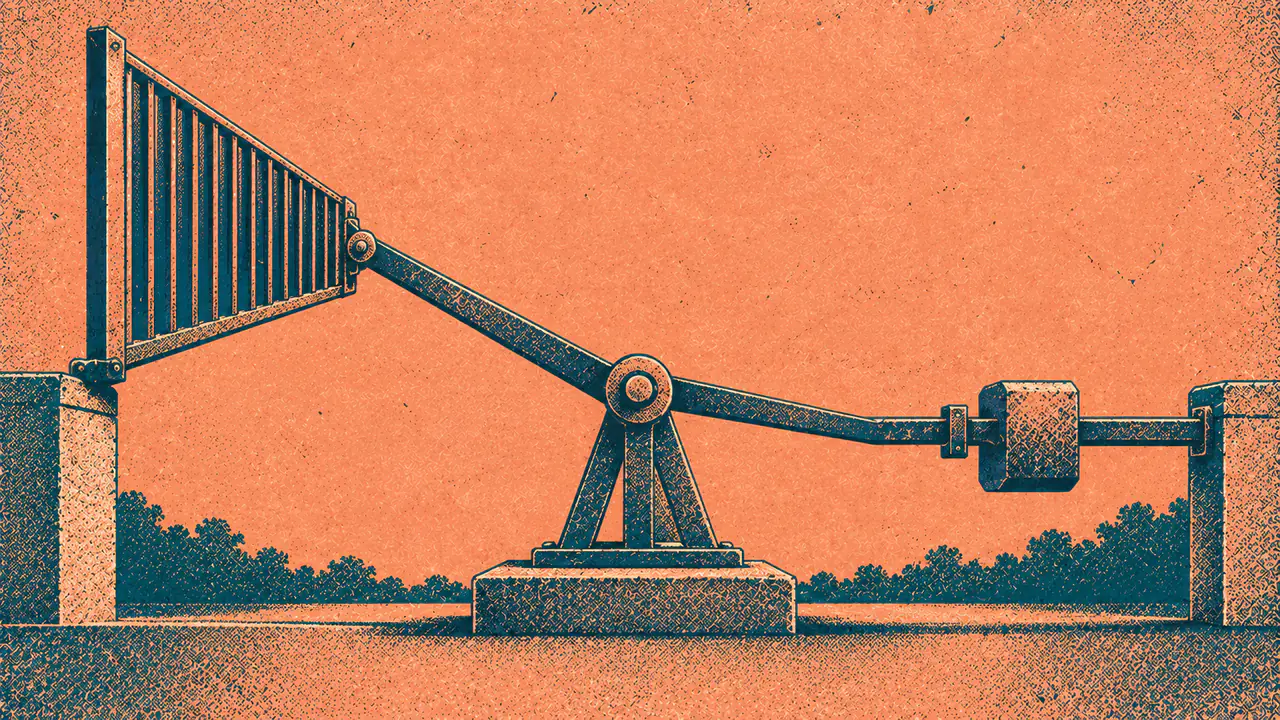
Raise the bid when you are not serving at all. Improve relevance when you are serving and it costs too much. Those two sentences resolve most of the question, and the reason they do is structural: in a relevance-weighted second-price auction, the bid governs eligibility and relevance governs price.
What the auction mechanism implies
ChatGPT Ads runs a relevance-weighted auction and clears at second price. Both parts matter and they do different jobs.
Relevance weighting means your bid is not the only input to whether you win. A competitor with a lower bid and a better match to the conversation can outrank you. Raising your bid can buy back that gap, but it buys it at your own expense rather than fixing the thing that created it.
Second-price clearing means you do not pay your bid. You pay what was required to beat the next advertiser, adjusted for the relevance weighting. This is the part advertisers forget when they raise bids in a panic. If you are already winning impressions, raising your bid from four dollars to six does not necessarily change your cost per click at all, because you were never paying four. It changes the ceiling, not the price. The change shows up only in the auctions you were previously losing, which are by definition the ones where you were outranked.
That gives you a diagnostic. If you raise the bid and average CPC barely moves while impressions rise, you were bid-constrained and the raise was correct. If you raise the bid and average CPC rises roughly in step, you have bought yourself into auctions you were losing on relevance, and you are now paying a relevance penalty on every one of them.
When raising the bid is genuinely correct
There are three situations, and they are all about eligibility rather than efficiency.
No delivery at all. A campaign with complete verification, live dates, approved ads and adequate targeting breadth that still shows zero impressions may be bidding under the clearing price. This is the clearest case for a bid raise, because a bid that never wins produces no data of any kind, and no amount of relevance work on an ad that never serves will change a zero.
Thin inventory in a narrow theme. Ad groups built around a genuinely small conversation surface compete for few opportunities. When the available auctions are scarce, losing any of them is expensive in learning terms, and paying a premium to be present is defensible in a way it is not on a broad theme.
Deliberate entry into a competitive category. If you have decided to be present in a theme where better-established advertisers hold relevance advantages you cannot close quickly, bid is the only lever that works on your timescale. Do this knowingly, with a cost ceiling written down in advance, not as a reaction to a slow Tuesday.
Note what is absent from that list: a poor CTR, a high cost per lead, or an ad group that is serving but converting badly. None of those are bid problems, and raising the bid makes each of them worse by increasing the price of traffic you have already decided is not worth what you are paying.
The bid guidance, and what it is worth
Bid guidance circulating through 2026 puts CPC starting bids in the three to five dollar range and a default maximum CPM around 60 USD. That guidance is reported in agency write-ups citing OpenAI, not published by OpenAI as a floor or a rule. It is a starting point that many advertisers happen to share, which means it tells you where the crowd is rather than where the auction clears.
Two consequences follow. First, a number that everyone starts at is a weak signal about your own category, because the clearing price in a legal-services theme and a project-management theme have no reason to be the same. Second, independently reported outcomes already sit outside that range: MediaPost reported in August 2026 that Peter Jaffray of Choice OMG recorded roughly 7 USD per click across 415 USD of June 2026 spend, 9,000 impressions and 60 clicks at a 0.6% CTR. One advertiser, one month, one set of campaigns. But it is enough to stop treating three to five dollars as a description of what you will pay.
What improving relevance actually means here
Relevance is never surfaced as a number. There is no quality score, no relevance diagnostic and no per-hint reporting, so relevance work is done blind and read only through its effects on CTR and average CPC together.
Three layers are available.
Hint specificity. A hint carrying an audience, an intent and a constraint describes a narrower situation, and a narrower situation is one your ad matches better when it matches at all. This is relevance work done before the auction.
Creative match. The ad that reads as an answer to the situation described in the hint will out-click the ad that reads as a generic brand statement. Since ads report at ad level and share the group's hints and bid, this is the one controlled comparison the platform gives you for free.
Ad group coherence. An ad group holding two themes cannot have creative that matches both well. Splitting is a relevance intervention as much as a measurement one.
The read you are looking for is CTR rising while average CPC holds or falls. That combination is the closest thing to evidence that the relevance weighting moved in your favour. CTR rising while CPC rises too is more likely to mean you changed what you were matching rather than how well you matched it.
The decision, in order
- Is the campaign serving at all? If no, this is a delivery question before it is a bid question. Check verification, dates, review status and targeting breadth first, then raise the bid.
- Is it serving but under-pacing against budget? Raise the bid in one increment, then watch impressions and average CPC. If impressions rise and CPC is flat, continue. If both rise, stop and work on relevance.
- Is it pacing fully and the cost per qualified lead is too high? Do not touch the bid. This is a relevance and creative problem, and a bid raise will only increase the cost of the traffic you already think is overpriced.
- Is it pacing fully and performing acceptably? Do not touch anything. Scale the budget, not the bid, and read the result before doing it again.
The reckoning: none of this is measurable from the outside
The mechanism here is documented. The magnitudes are not, and anyone giving you a number for how much relevance is worth in this auction is guessing.
OpenAI states that the auction is relevance-weighted. It does not publish the weighting, the relevance inputs, or how strongly CTR feeds back into future eligibility. No advertiser has published a controlled bid test on this channel. That means the diagnostic above, raise the bid and watch whether CPC moves in step, is the best available instrument and it is a crude one, because on a campaign buying five clicks a day the noise in average CPC is larger than most of the effects you are trying to detect.
There is also a direct challenge to the relevance orthodoxy from the only published head-to-head on matching style. Search Engine Land in 2026 ran a keyword-style ad group against a natural-language ad group with identical creative, and the keyword group served far more, at a slightly higher CTR and a slightly lower average CPC. If the matcher were as sensitive to careful conversational phrasing as the guidance implies, that result should have gone the other way. Hold the relevance-writing advice loosely. Hold the structural advice, one theme per ad group, more firmly.
What we cannot tell you
- How much relevance is worth against bid. The weighting is undocumented and no advertiser has published a controlled test.
- What the clearing price is in your category. Not reported, not inferable from the platform, and the circulating three to five dollar range is a starting point rather than a measurement.
- Whether CTR feeds back into future eligibility. Plausible in any relevance-weighted auction, undocumented here.
- Whether bid changes have a settling period. No learning-phase behaviour is documented for ChatGPT Ads.
- What share of auctions you are losing. There is no impression share, lost-impression-share or auction-insights reporting of any kind.
Quick answers
Should I raise my ChatGPT Ads bid if performance is poor? Almost never. Poor performance at full pacing is a relevance and creative problem, and raising the bid increases the price of traffic you have already judged overpriced. Raise the bid only when you are not serving or not pacing.
What is a normal ChatGPT Ads CPC bid? Guidance circulating in 2026 suggests three to five dollars CPC and a 60 USD default max CPM, reported in agency write-ups citing OpenAI rather than published as a floor. One reported June 2026 test recorded roughly 7 USD per click.
Does raising my bid raise my cost per click? Not automatically. The auction clears at second price, so raising your maximum changes the ceiling, not the price of auctions you were already winning. It raises cost only where it buys you into auctions you were previously losing.
How do I improve relevance when there is no quality score? Narrow the hint to a specific audience, intent and constraint, write creative that reads as an answer to that situation, and keep one theme per ad group. Read the result as CTR and average CPC moving together.
Where is the bid set in ChatGPT Ads? At ad group level. The campaign holds the objective, budget, dates, locations and audiences; the ad group holds the bid, the default destination URL and the context hints.
Can I see how often I lose the auction? No. There is no impression share or auction insights reporting, so a bid raise is evaluated only by watching impressions and average CPC afterwards.
Sources
| Claim | Source | Tier |
|---|---|---|
| Auction is relevance-weighted | OpenAI documentation, 2026 | Confirmed, primary |
| Bid is set at ad group level; campaign holds budget, dates, locations | OpenAI Help Center, campaign and ad group structure, August 2026 | Confirmed, primary |
| Three to five dollar CPC starting bid guidance, 60 USD default max CPM | Multiple agency write-ups citing OpenAI guidance, 2026 | Reported |
| Roughly 7 USD per click, 415 USD spend, 9,000 impressions, 60 clicks, 0.6% CTR, June 2026 | MediaPost, 31 August 2026, citing Peter Jaffray of Choice OMG | Reported, third party, single test |
| Keyword-style ad group outserved a natural-language group with identical creative, higher CTR and lower avg CPC | Search Engine Land, 2026 | Reported, third party, single test |
| No quality score, no impression share, no auction insights | OpenAI Ads Manager, by absence | Absent |
| Bid raise diagnostic via impressions versus average CPC movement | Second-price auction mechanics applied to this platform | Inference, ours |
Related reading
- How the ChatGPT Ads Auction Works: Objectives, Bids and Budgets
- Why Your ChatGPT Ads Campaign Is Not Spending
- How to Write a ChatGPT Ads Context Hint
- Reading CTR and CPC When No Benchmarks Exist
- What ChatGPT Ads Cost
Changelog
12 September 2026, v1.0. First publication. Separates bid as an eligibility lever from relevance as a price lever, gives the second-price diagnostic for reading a bid raise, and records the 7 USD reported CPC against the circulating three to five dollar guidance.
Field kit
Tools
Site
OpenAI (primary)
Keshav studies how AI systems retrieve, verify, and cite brand information. At InPromptAds, he leads source research and turns platform documentation into practical guidance for advertisers.